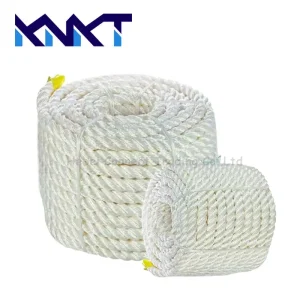










MEG4 mooring lines play an important role in the safe mooring of tankers and other vessels at terminals. Choosing the right rope involves more than selecting a material or breaking strength. Ship operators and purchasing teams also need to consider the vessel’s mooring system design, line performance, supporting documentation, inspection procedures and service life.
The Oil Companies International Marine Forum (OCIMF) published the fourth edition of its Mooring Equipment Guidelines (MEG4) in 2018. The guidelines provide recommendations for improving the design, selection, management and safe use of mooring equipment.
This guide explains the key considerations for MEG4 mooring lines and helps buyers prepare clearer specifications when sourcing marine ropes.

What Are MEG4 Mooring Lines?
MEG4 mooring lines are ropes selected, specified and managed in accordance with the applicable recommendations of OCIMF’s fourth-edition Mooring Equipment Guidelines. The guidelines cover more than rope strength. They address the broader mooring system, including equipment selection, line performance, documentation, condition monitoring and retirement.
For shipowners, operators and procurement teams, understanding MEG4 helps ensure that a replacement rope is suitable for the vessel’s existing mooring arrangement rather than simply matching the diameter of the old line.
MEG4 is industry guidance, not a universal product certification issued by OCIMF to every rope manufacturer. Whether a particular rope meets a project’s requirements must be assessed against the applicable specifications, design information and supporting documentation.
Key MEG4 Mooring Line Requirements to Understand
1. Mooring Line Strength
Strength terminology is one of the most important parts of a mooring rope specification. MEG4 uses specific terminology to help avoid confusion between different strength values.
- Ship Design MBL: The reference strength value used in the design of the ship’s mooring system.
- Line Design Break Force (LDBF): The design breaking force assigned to a mooring line under the applicable MEG4 definitions.
- Working Load Limit (WLL): The maximum permitted working load specified for the relevant equipment or application.
These values serve different purposes and should not be treated as interchangeable. A rope with a higher breaking force is not automatically a suitable replacement. Its strength must be compatible with the winches, fittings, line arrangement and overall mooring system design.
When requesting a quotation, buyers should provide the required strength parameters and clarify which design basis applies. If the original specifications are unavailable, the vessel operator or responsible technical team should establish the correct requirements before ordering.
2. Rope Construction and Material Selection
Synthetic mooring lines are available in different fiber materials and constructions, each offering specific performance characteristics.
- Polyester ropes: commonly considered where strength, durability and controlled elongation are important.
- Polypropylene ropes: may be suitable for applications where low weight and buoyancy are useful.
- High-modulus polyethylene (HMPE) ropes: offer a high strength-to-weight ratio and can be advantageous where handling weight.
However, material selection should not be based on fiber type alone. Buyers should also consider rope construction, abrasion exposure, environmental conditions and compatibility with the existing deck equipment.
The proposed rope must meet the applicable project requirements, regardless of whether it is made from polyester, polypropylene, HMPE or another approved material.
3. Check End Terminations and Connection Dimensions
End terminations are an important part of the finished mooring line specification.
Depending on the application, a rope may require spliced eyes, protective thimbles or customized end configurations. The dimensions must be suitable for the intended connection points, including the relevant shackles, bollards or other fittings.
A quotation request should therefore specify the required eye dimensions, termination type and any special connection requirements. Drawings or photographs of the existing arrangement can help clarify details that may otherwise be overlooked.
How to Prepare an Accurate RFQ for MEG4 Mooring Lines
An incomplete request for quotation can lead to repeated technical clarification, delayed pricing or an unsuitable product proposal. To obtain a more accurate quotation, buyers should prepare the following information before contacting mooring line supplier.
- Vessel and application: Identify the vessel type, intended use and any relevant project or terminal requirements.
- Rope specifications: Provide the required construction, material, diameter, finished length and strength parameters.
- End configuration: State the required termination type, eye dimensions and connection details.
- Quantity and delivery: Confirm the number of lines, destination and requested delivery schedule.
- Documentation and inspection: List the required certificates, test records, inspection arrangements and any project-specific acceptance criteria.
- Reference information: Attach the existing rope specification, technical drawings, photographs or equipment interface dimensions whenever available.
A complete RFQ allows the supplier to assess the request more efficiently and identify missing information before production begins. It also makes quotations easier to compare on a like-for-like basis.
Inspection, Service History and Rope Replacement
The selection of MEG4 mooring lines does not end when the rope is delivered. Effective line management also requires appropriate identification, inspection and service records.
Abrasion, localized damage, unusual loading, environmental exposure and handling conditions can affect a line’s condition over time. Inspection and retirement decisions should follow the applicable vessel procedures, manufacturer recommendations and relevant industry guidance.
For replacement orders, buyers should communicate any known history of abnormal loading, damage or operational problems. This information may help the responsible technical team determine whether a direct replacement is appropriate or whether the original specification needs to be reviewed.
A replacement should not be approved solely because its dimensions match the existing line. Strength, construction, termination details and compatibility with the mooring system remain essential considerations.
How to Choose a Reliable MEG4 Mooring Line Supplier
A suitable supplier should be able to review the customer’s technical specification, explain the proposed rope construction and provide the documentation agreed for the order.
Before placing an order, consider whether the supplier can:
- Review the required dimensions, strength parameters and end terminations.
- Explain the proposed material and construction in relation to the application.
- Provide relevant test documentation and product traceability information.
- Confirm production lead time, inspection arrangements and delivery requirements.
- Clarify any technical limitations before the order is confirmed.
Clear communication at the quotation stage helps reduce specification errors and makes it easier to compare offers from different suppliers.
For customized mooring lines, supplying drawings, existing rope details or equipment interface dimensions can help the supplier assess the request more accurately.
Conclusion
Selecting MEG4 mooring lines requires careful consideration of strength requirements, rope construction, end terminations, documentation and compatibility with the vessel’s mooring system. By preparing a complete technical specification and confirming the applicable requirements before ordering, shipowners, operators and purchasing teams can reduce sourcing risks and make more informed decisions.
Looking for MEG4 mooring lines? Feel free to contact us with your specifications and requirements for a suitable solution and quotation.