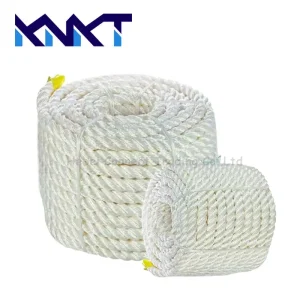










Custom UHMWPE/HMPE rope, made from high-modulus polyethylene fibers, is widely used in marine, mooring, towing, winching, fishing and industrial applications. Its high strength-to-weight ratio makes it suitable for demanding operations where rope performance, handling and weight are important considerations.
However, selecting a HMPE rope involves more than choosing a diameter or specifying a breaking load. Rope construction, finished length, end terminations, protective covers and operating conditions all affect the final configuration.
A well-defined customization process helps ensure that the proposed rope matches the intended application, equipment requirements and performance expectations. This guide explains eight key specifications to confirm when developing a custom HMPE rope, from initial application assessment to testing and documentation.

1. Define Application Requirements for Custom UHMWPE Rope
The first step in a custom UHMWPE rope project is to define the intended application. Different applications place different demands on rope construction, abrasion resistance, flexibility, elongation and end termination.
Common applications include:
- Marine mooring: Requirements may include specified breaking strength, suitable spliced eyes, chafe protection and compatibility with the vessel’s mooring arrangement.
- Winching and towing: Drum dimensions, sheave compatibility, operating loads, fleet angle and abrasion exposure may influence rope selection.
- Commercial fishing: Handling characteristics, wear resistance, rope flexibility and exposure to seawater may affect the preferred configuration.
- Offshore and industrial operations: Load requirements, environmental conditions, traceability and inspection documentation may be essential parts of the specification.
The application should be defined before the rope construction is finalized. Where the rope will operate with a winch, capstan, pulley, fairlead or other equipment, the relevant equipment details should be included in the technical review.
2. Specify Rope Diameter and Finished Length
HMPE Rope diameter and length are fundamental parameters in custom mooring rope production. They should be defined alongside any dimensional tolerances and installation requirements.
Diameter: The nominal diameter should be stated in millimeters or inches. Where equipment clearance or dimensional tolerances are critical, the acceptable range and measurement method should also be specified. Braided rope diameter can vary with construction, tension and measurement conditions.
Finished length: The specification should distinguish between the overall finished length and the usable working length. For rope with spliced eyes or other terminations, the measurement reference points need to be clearly defined.
Additional details to confirm include:
- Length per piece and total order quantity
- Number of pieces or coils required
- Length tolerance
- Whether the stated length includes spliced eyes or other terminations
- Reel, coil and packaging requirements
3. Select the Appropriate HMPE Rope Construction
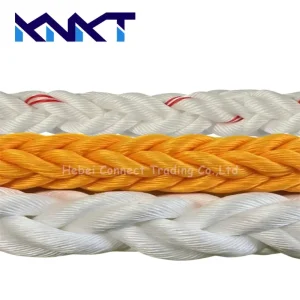
HMPE rope is available in different braided constructions. The suitable design depends on the application, performance requirements, handling conditions and compatibility with the operating equipment.
| Rope Construction | Structure | Typical Applications | Key Customization Details |
| 8-strand HMPE rope | Eight strands braided together | Mooring, towing and other marine or industrial applications | Fiber material, diameter, breaking strength and end splicing requirements |
| 12-strand braided HMPE rope | Twelve strands forming a single braided rope | Mooring, winching, towing and high-strength rope applications | Fiber grade, diameter, required breaking load, coating and end termination |
| Double-braided HMPE mooring rope | A braided core combined with a braided cover; material composition varies by design | Marine mooring and applications requiring a covered rope construction | Core and cover materials, overall diameter, breaking strength and abrasion protection |

The actual performance of each construction depends on the rope design, fiber grade, manufacturing process and finishing details. Strand count alone does not determine breaking strength or service life.
If your project requires a specific rope design, provide the relevant technical datasheet, drawing or reference sample to help the supplier confirm the specifications.
4. Define the Required Breaking Strength
Breaking strength is a critical specification when developing a custom UHMWPE rope. The required value should be defined clearly so that the proposed product and any supporting test data can be evaluated on a consistent basis.
Minimum breaking load (MBL) is the specified minimum breaking-load value under the applicable test or specification conditions. Actual test results may depend on the rope construction, sample preparation, test method and termination arrangement.
The customization specification should clarify:
- Required minimum breaking load and unit, such as kN or tonnes-force
- Whether the requirement applies to the rope or the completed assembly
- Whether splices, eyes or other terminations are included in the performance requirement
- Applicable test methods and required test reports
- Relevant standards or project-specific technical requirements
For lifting and other safety-critical applications, the rope and complete assembly must meet the requirements applicable to the intended use. Selection should therefore consider the complete system rather than relying on diameter or nominal strength alone.
5. Determine the Required End Terminations
End terminations affect installation, connection compatibility and the performance of the finished rope assembly. Their design should be established before production.
Common options include:
- Plain or cut ends: Suitable for applications where the customer will carry out further processing or termination.
- Spliced eyes at one or both ends: Loops formed at the rope ends for connecting to compatible equipment.
- Protective eye covers or chafe protection: Additional protection for rope sections exposed to wear at connection points.
- Thimbles or other specified end fittings, where suitable for the rope design
For spliced eyes, the specification should identify the required eye dimensions, opening size, number of eyes and measurement method for the finished rope length.
The termination must also be compatible with the intended attachment point. A rope used in a mooring system, for example, may require a different eye configuration from one installed on a winch.
6. Specify the Protective Cover, Coating and Color
Protection requirements should reflect actual working conditions rather than appearance alone.
An exposed rope may experience abrasion against drums, fairleads or deck equipment. Other applications may require protection against ultraviolet exposure, contamination or localized wear.
Depending on the rope design, available options may include:
- A coated or treated rope surface.
- A protective sleeve or localized chafe cover.
- A braided outer cover using a specified fiber.
- A specified rope color for identification or operational purposes.
For a double-braided construction, clarify whether the cover is an integral part of the rope or an additional protective sleeve. These are different requirements and should not be treated as the same product feature.
7. Assess the Operating Environment & Equipment Compatibility
The operating environment is an important part of HMPE rope customization. A rope that meets a specified breaking load may still be unsuitable if its construction or configuration does not match the actual operating conditions.
- Temperature: Expected ambient and rope operating temperatures.
- Marine exposure: Seawater, moisture and outdoor exposure may influence material selection, protective measures and inspection requirements.
- Abrasion and bending: Repeated contact with drums, sheaves, fairleads and other equipment can affect wear.
- Loading pattern: Static tension, repeated loading, shock loading or dynamic service.
- Equipment compatibility: Drum dimensions, sheave diameter, bending geometry and contact surfaces.
- Service expectations: Expected operating frequency, inspection arrangements and maintenance practices.
HMPE rope’s high strength-to-weight ratio does not automatically make every configuration suitable for every application. Material properties, rope construction, equipment compatibility, operating loads and applicable safety requirements should be evaluated together.
8. Confirm Testing, Certification and Inspection Requirements
Testing and documentation requirements should be established before the order is finalized. This is particularly important for marine, offshore, industrial and project-based procurement.
Depending on the application and contractual requirements, the required documentation may include:
- Product datasheet identifying material, construction, diameter and performance specifications
- Breaking-load test report
- Material or conformity documentation, where applicable
- Batch identification and traceability records
- Third-party inspection or test documentation, if required
- Certificates or approvals required by the relevant project, classification society or applicable standard
Not every HMPE rope requires the same documentation package. Requirements should be based on the intended application, purchase specification and applicable standards rather than assumed to be universal.
Clarify which documents are included in the supply and whether additional testing, inspection or approval will affect cost and lead time. Any mandatory standard or certificate should be identified before production planning begins.
How to Choose Custom UHMWPE Rope Manufacturers & Suppliers
Selecting a suitable supplier is part of the customization process. A competitive quotation should be evaluated against the technical specification, not price alone.
Key considerations include:
- Technical alignment: Whether the proposed material, construction, diameter, length and terminations match the requirements.
- Performance verification: Whether the stated breaking strength is supported by relevant test data and clearly defined test conditions.
- Customization capability: Whether the supplier can accommodate the required configuration, order quantity and delivery schedule.
- Quality control and traceability: Whether relevant inspection arrangements and product records are available.
- Quotation transparency: Whether price, lead time, packaging, documentation and additional inspection costs are clearly stated.
For customized HMPE rope used in winching, fishing, towing or mooring, a clear technical review helps identify suitable configurations before production. It also makes supplier proposals easier to compare and reduces the likelihood of costly specification changes later.
Conclusion: From Application Requirements to Custom HMPE Rope
Customizing HMPE rope starts with defining the application and translating its operating requirements into a complete technical specification. Diameter, length, construction, breaking strength, end terminations, protective features, operating environment and documentation all contribute to the final product configuration.
Hebei Connect Trading Co., Ltd. provides customized HMPE rope solutions tailored to specific applications, technical specifications and performance requirements. Contact us to discuss project requirements and obtain a suitable quotation.